At 2:10 a.m. on a Tuesday, Lakshmi’s phone lit up on the bedside table. It was the transplant coordinator: “We may have lungs for you. Please don’t eat or drink anything, and come to the hospital now.” Her bag had been packed for five months. Her son had the car keys hanging by the door. Ninety minutes later, she was in the transplant ward having her blood drawn.
Lakshmi, a 46-year-old schoolteacher with lung fibrosis, is a composite of many patients we have cared for. Her story shows something families rarely hear: life on the lung transplant waiting list is not passive waiting. It is active preparation. The strength you build, the infections you avoid and the plans you make in these months directly shape how well you come through surgery.
This guide explains how the waiting list works in Karnataka, why the call can be unpredictable, the five things that matter most while you wait, and exactly what happens when your phone finally rings.
- In Karnataka, deceased-donor organs are allocated through SOTTO (formerly Jeevasarthakathe), based on medical urgency, blood group, size match and other medical factors, not wealth or connections.
- Nobody can predict exactly how long you will wait. Your job is to be the strongest possible candidate on any given day.
- Exercise capacity matters. A longer six-minute walk distance is linked to lower risk both while waiting and after transplant.
- Keep your phone on loud, your bag packed and your team informed of every infection, hospital visit or new medicine.
- Sometimes a call ends without surgery because the donor lungs are not suitable. This is a safety step, not a failure.
How the Lung Transplant Waiting List Works in Karnataka
In India, organ allocation is run at the state level. In Karnataka, the government-appointed body is the State Organ and Tissue Transplant Organisation (SOTTO), still widely known by its earlier name, Jeevasarthakathe. It maintains the waiting list and coordinates every deceased organ donation in the state. State agencies are linked to regional (ROTTO) and national (NOTTO) networks.
Here is how you get onto the list:
- Evaluation: Your transplant team completes a full medical evaluation and decides you are a suitable candidate.
- Registration: The hospital’s transplant coordinator registers you with SOTTO, submitting your medical details, blood group and other information.
- Verification: SOTTO verifies the application and you become active on the waiting list.
- Allocation: When donor lungs become available, they are offered according to defined rules, which consider medical urgency, blood group compatibility, body and chest size, and other clinical factors. Patients in an emergency can be prioritised.
The need is far greater than the supply. Government data reported in late 2025 showed fewer than a thousand people registered on India’s national lung waiting list, while researchers estimate the true number of people who could benefit is much higher. That gap is why every donation matters, and why our article on brain death and organ donation myths is worth sharing with your family and friends.
Why Lungs Are the Hardest Organ to Match
Many families ask why a donor might give a kidney and a liver, but not lungs. The answer is that lungs are uniquely fragile.
Lungs breathe in air directly, so they are vulnerable to pneumonia while a donor is on a ventilator.
Many donors are road accident victims. Chest injury or inhaled stomach contents can damage the lungs.
Donor lungs must be the right size for your chest cavity, which narrows the pool of matches.
Once retrieved, lungs need to be transplanted within a matter of hours, so everything moves quickly.
This is why the timing of your call is unpredictable, and why staying ready every single day matters so much.
Your 5 Jobs While You Wait
Job 1: Get stronger, not weaker
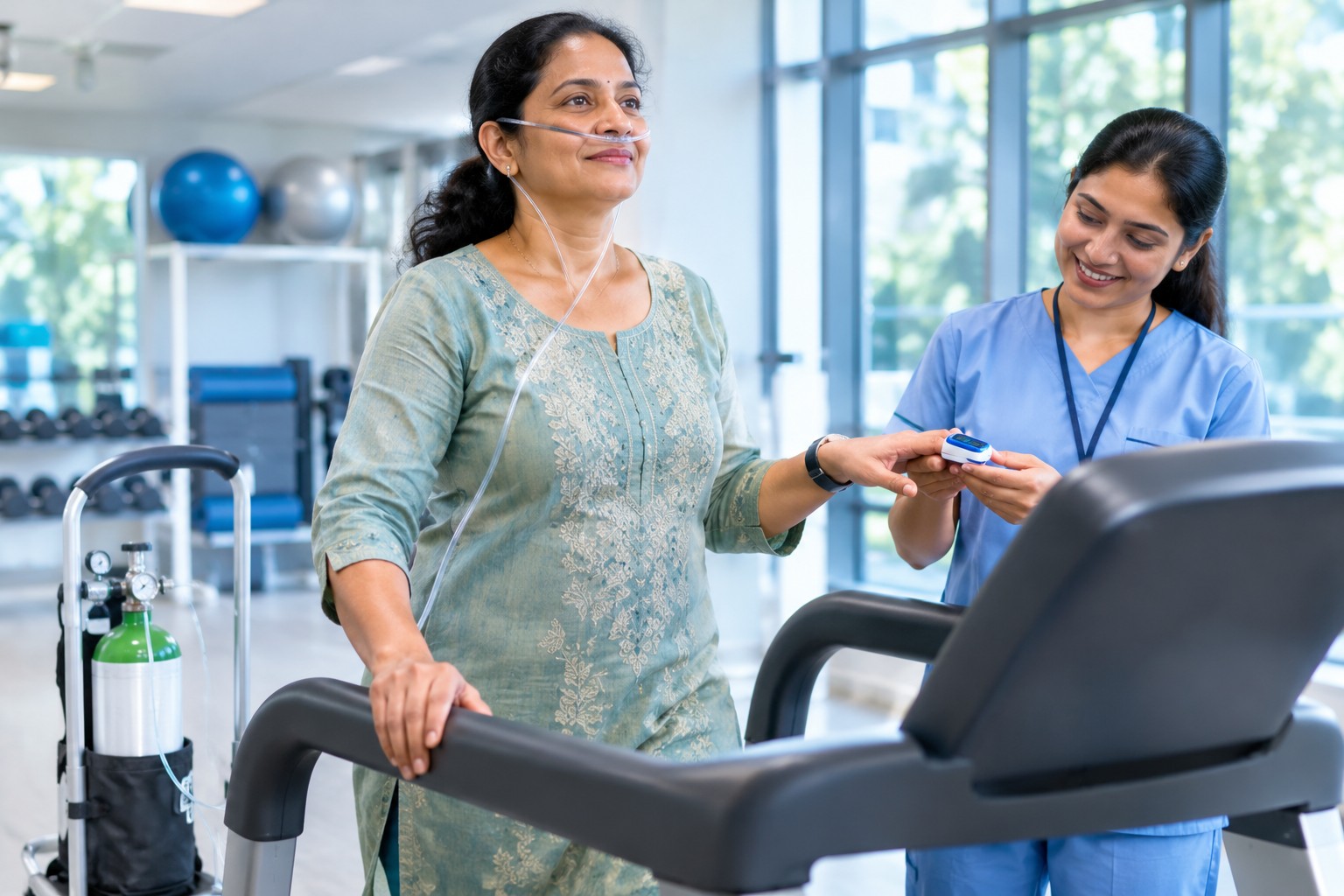
It sounds backwards. You are breathless, so why exercise? Because muscle is your reserve for surgery. Research in lung transplant candidates shows that a longer six-minute walk distance is associated with lower risk of dying on the waiting list and in the first year after transplant. Several studies found that structured pulmonary rehabilitation programmes improved walking distance by around 70 to 100 metres and also improved mood and breathlessness.
A typical “prehab” routine your team might design includes:
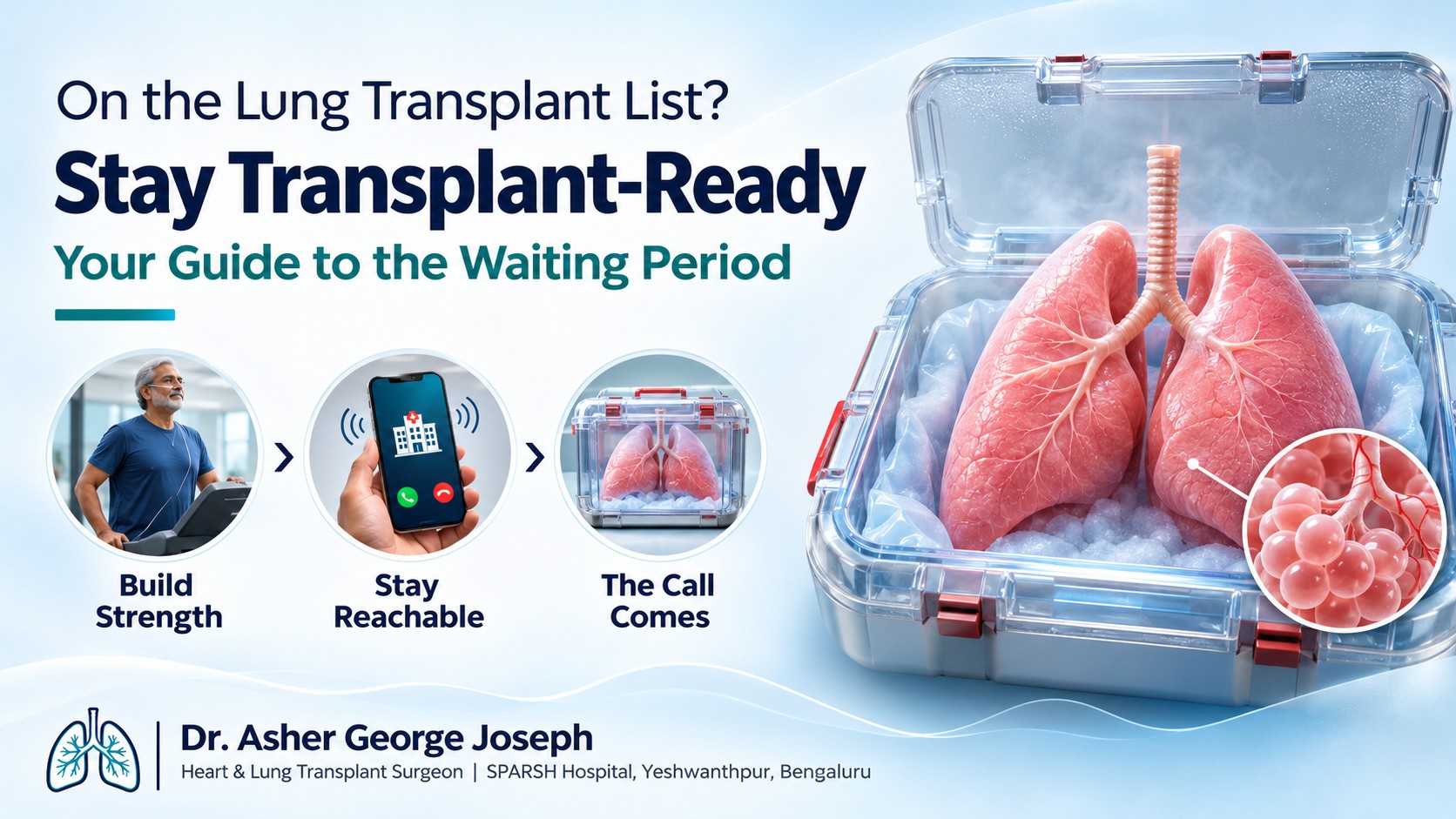
- Walking or cycling with your prescribed oxygen, most days of the week.
- Leg and arm strengthening with light weights or resistance bands, two to three times a week.
- Breathing techniques such as pursed-lip breathing to manage breathlessness.
- Daily movement goals, like getting up from a chair ten times without using your hands.
Always exercise with the oxygen settings your team prescribes. Never push through chest pain, dizziness or oxygen levels below your doctor’s safe target.
Job 2: Eat to stay transplant-ready
Being significantly underweight or overweight both increase surgical risk. Advanced lung disease burns extra energy just to breathe, so many patients quietly lose muscle. Ask for a dietitian review and a personal weight target. Focus on adequate protein at every meal, such as dal, eggs, paneer, curd, fish or chicken, and small, frequent meals if large meals make you breathless.
Job 3: Stay reachable, every hour of every day
- Keep your phone charged, on loud, and switched on at night.
- Give the coordinator at least two backup numbers of family members.
- Inform the team before you travel out of town, change your address or change your phone number.
- Plan your route to the hospital and keep transport arranged at all hours.
Job 4: Avoid infections and keep your team informed
An infection can temporarily make you unsuitable for surgery. Wash hands often, avoid crowded places during flu season, and keep up with vaccines your doctor recommends. Get a dental check-up, because hidden tooth infections must be treated before transplant.
- A fever, new cough or chest infection
- Any hospital admission or emergency visit
- A blood transfusion, which can create antibodies that affect matching
- New medicines, including antibiotics or steroids
- A significant change in weight or increase in oxygen needs
Job 5: Look after your mind
Waiting is emotionally exhausting. Anxiety, low mood and “what if the call never comes?” thoughts are common and understandable. Speak to the transplant counsellor, connect with other patients if your centre offers support groups, and keep small daily routines that give you a sense of purpose. Feeling low is not a weakness. It is part of the journey and it deserves support.
The Transplant Hospital Bag: Pack It Today
| Category | What to pack |
|---|---|
| Documents | ID proof, insurance or scheme papers, SOTTO registration details, latest reports and prescription list |
| Medicines | Two days of current medicines in original strips, with a written list of doses |
| Oxygen | Portable cylinder with enough oxygen for the journey plus a margin |
| Comfort | Loose front-opening clothes, slippers, spectacles, phone charger with a long cable |
| Caregiver | Clothes and essentials for the family member who will stay nearby |
| Contacts | A printed sheet of important phone numbers, in case a phone battery dies |
What Happens When the Call Comes
Knowing the sequence in advance makes those first hours far less frightening.
- The call: The coordinator tells you to come in and to stop eating and drinking.
- Travel: Come straight to the hospital with your bag and oxygen. Do not stop for errands.
- Admission: Blood tests, a chest X-ray, an ECG and a final check that you are free of new infection.
- Donor assessment: Meanwhile, the retrieval team examines the donor lungs in person, often with a bronchoscopy, before deciding whether they are suitable.
- The go-ahead: Only when the team is satisfied are you taken to the operating theatre. A lung transplant typically takes several hours.
- ICU: You wake up in intensive care, usually still on a breathing tube at first, with your family updated by the team.
When the Call Doesn’t End in Surgery
Sometimes, after all of that, the team says the donor lungs are not good enough, and you go home. Transplant teams sometimes call this a “dry run”. It is deeply disappointing, but it means the team protected you from receiving lungs that might fail. Many patients receive their transplant after one or more dry runs. Treat each one as a rehearsal that makes the real day smoother.
A Word for Caregivers
The caregiver is a core member of the transplant team. You will likely help with travel, medicines, exercise, meals and encouragement, both now and during recovery. Plan who can share the load, arrange time off work in advance if possible, and look after your own sleep and health. A rested caregiver is a better caregiver.
On the waiting list, or considering it?
Whether you need a first transplant evaluation, a second opinion or help preparing while you wait, our team can guide you through each step. Dr. Asher George Joseph is a heart and lung transplant surgeon at SPARSH Hospital, Yeshwanthpur, Bengaluru, with specialist transplant and mechanical circulatory support training from Manchester, UK.
Frequently Asked Questions
How long is the waiting time for a lung transplant in India?
There is no fixed waiting time. It depends on your blood group, body and chest size, how urgent your condition is and how many suitable donors become available. Some patients wait weeks, others many months. Your coordinator can explain your individual situation.
How do I register for a lung transplant in Karnataka?
You cannot register yourself directly. After a transplant hospital evaluates you and confirms you are a suitable candidate, its transplant coordinator registers you with SOTTO Karnataka (formerly Jeevasarthakathe), which verifies and activates your listing.
Can I exercise while on the lung transplant waiting list?
Yes, and you should, under your team’s guidance. Supervised pulmonary rehabilitation improves walking distance, breathlessness and quality of life. Always use your prescribed oxygen and stop if you feel chest pain or dizziness.
What happens if I get an infection while waiting?
Inform your transplant team immediately. You may be temporarily put on hold until the infection is treated, then reactivated. This protects you from having major surgery while your body is fighting an infection.
Why was I called but the transplant was cancelled?
Donor lungs are examined carefully after retrieval. If they show damage, infection or poor function, the team will not use them. This “dry run” is a safety measure, and many patients go on to a successful transplant later.
Can I travel while on the waiting list?
Short local travel is usually fine, but you must remain reachable and able to reach the hospital quickly. Always inform your coordinator before travelling outside your city.
This article is for general education and does not replace advice from your transplant team. Patient stories are composites, shared to protect privacy. Allocation rules are set by the state authority and may change.
- Leard LE, et al. Consensus document for the selection of lung transplant candidates: an update from the ISHLT. J Heart Lung Transplant. 2021.
- Byrd R, et al. Pre-transplant rehabilitation and six-minute walk distance in lung transplant candidates. PMC6456901.
- Florian J, et al. Impact of pulmonary rehabilitation on quality of life and functional capacity in patients on lung transplant waiting lists. J Bras Pneumol.
- Polastri M, et al. Does preoperative rehabilitation influence quality of life in lung transplant candidates? Exp Clin Transplant. 2022.
- SOTTO Karnataka (Jeevasarthakathe) and NOTTO public information on organ allocation.