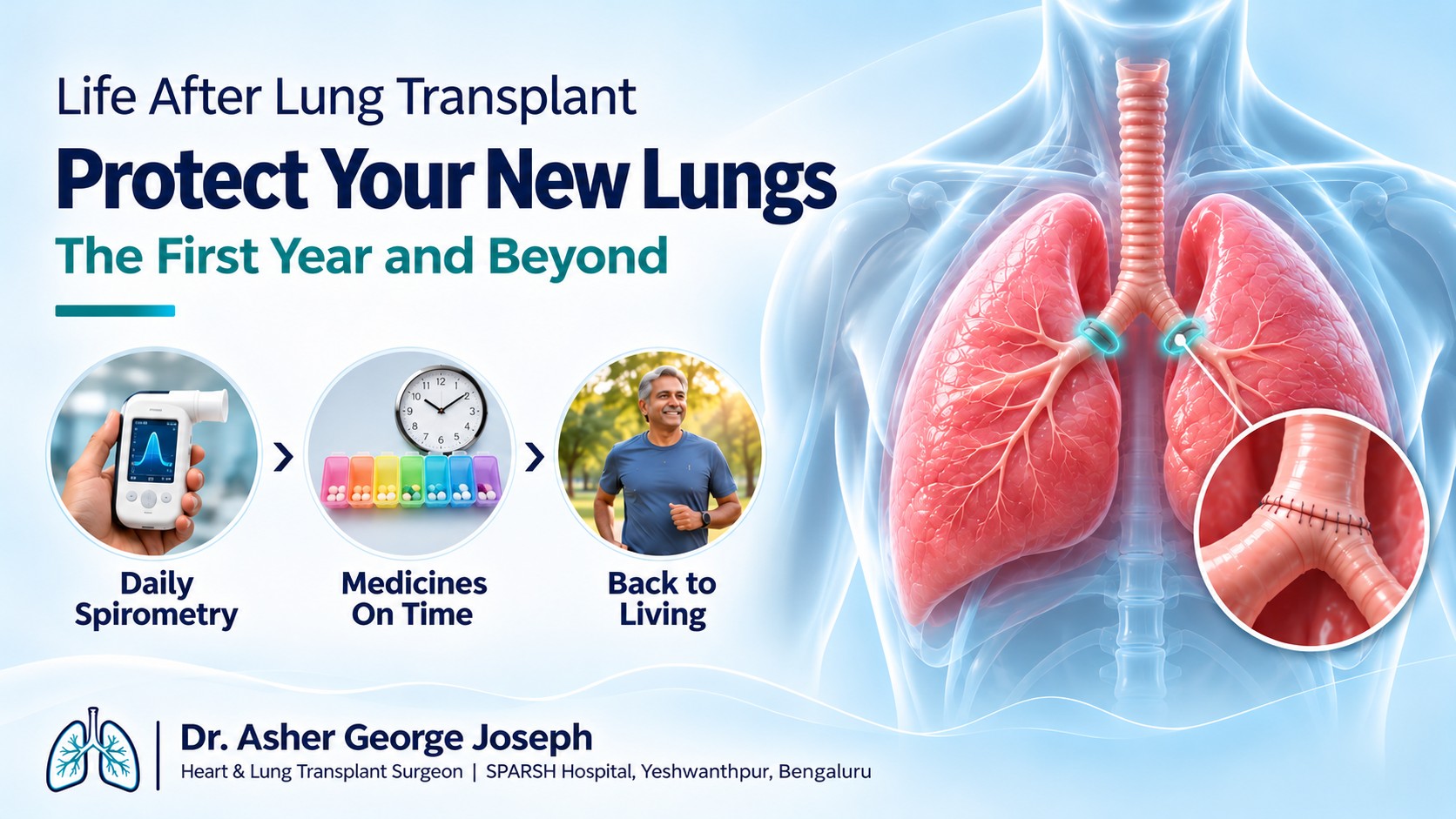
Eight months after his double lung transplant, Prakash climbed the 72 steps to his terrace in Bengaluru without stopping. Two years earlier, he had needed oxygen to walk to the bathroom. Every morning now begins the same way: blow into a small handheld spirometer, write down the number, take his tablets at exactly 8 o’clock. “The surgery gave me my lungs,” he says. “The routine is how I keep them.”
Prakash is a composite of the recipients we follow, but his routine is very real. Families often focus on the day of surgery. Yet the true work of life after lung transplant begins when you go home. Lungs are the only transplanted organ that breathes in the outside world with every breath, which makes them more exposed to infection and rejection than a kidney or a heart.
This guide walks you through the first year month by month, explains the warning signs that matter most, and answers the honest questions recipients ask about work, travel, food and the future.
- The first year carries the highest risk of infection and acute rejection, so visits and tests are most frequent then.
- A drop of 10% or more in your home spirometry reading, lasting more than a day or two, should be reported to your transplant team.
- Chronic lung allograft dysfunction (CLAD) is the main long-term challenge. It is defined as a persistent fall in lung function of 20% or more from your best post-transplant value.
- Anti-rejection medicines must be taken on time, every day, for life. Never stop or change them without your team.
- Most survivors return to an active life. Registry data show that over 80% report no activity limitations in the years after transplant.
Your First Year After Lung Transplant, Month by Month
| Time after surgery | What typically happens | Your focus |
|---|---|---|
| Weeks 1–3 | ICU, then the transplant ward. Breathing tube removed, drains out, walking begins. | Breathing exercises, walking, learning your medicines |
| Months 1–3 | Frequent clinic visits, blood tests for drug levels, chest X-rays and scheduled bronchoscopies in many centres. Most patients stay close to the hospital. | Pulmonary rehab, infection precautions, home spirometry |
| Months 3–6 | Visits become less frequent. Strength and stamina improve steadily. Medicine doses are adjusted. | Building fitness, gradual return to daily activities |
| Months 6–12 | Many recipients resume light work, social life and local travel with their team’s approval. | Staying consistent, routine check-ups, vaccines as advised |
| Year 1 and beyond | Lifelong follow-up, usually every few months, plus annual screening tests. | Protecting long-term lung function |
Every centre’s schedule is slightly different, and your team will personalise it. If you had a lung transplant after a long illness, recovery may feel slower at first, and that is normal. For what to expect in the earliest weeks of chest surgery recovery in general, our guide to the first six weeks at home after surgery offers useful practical tips.
Home Spirometry: Your Daily Early-Warning System
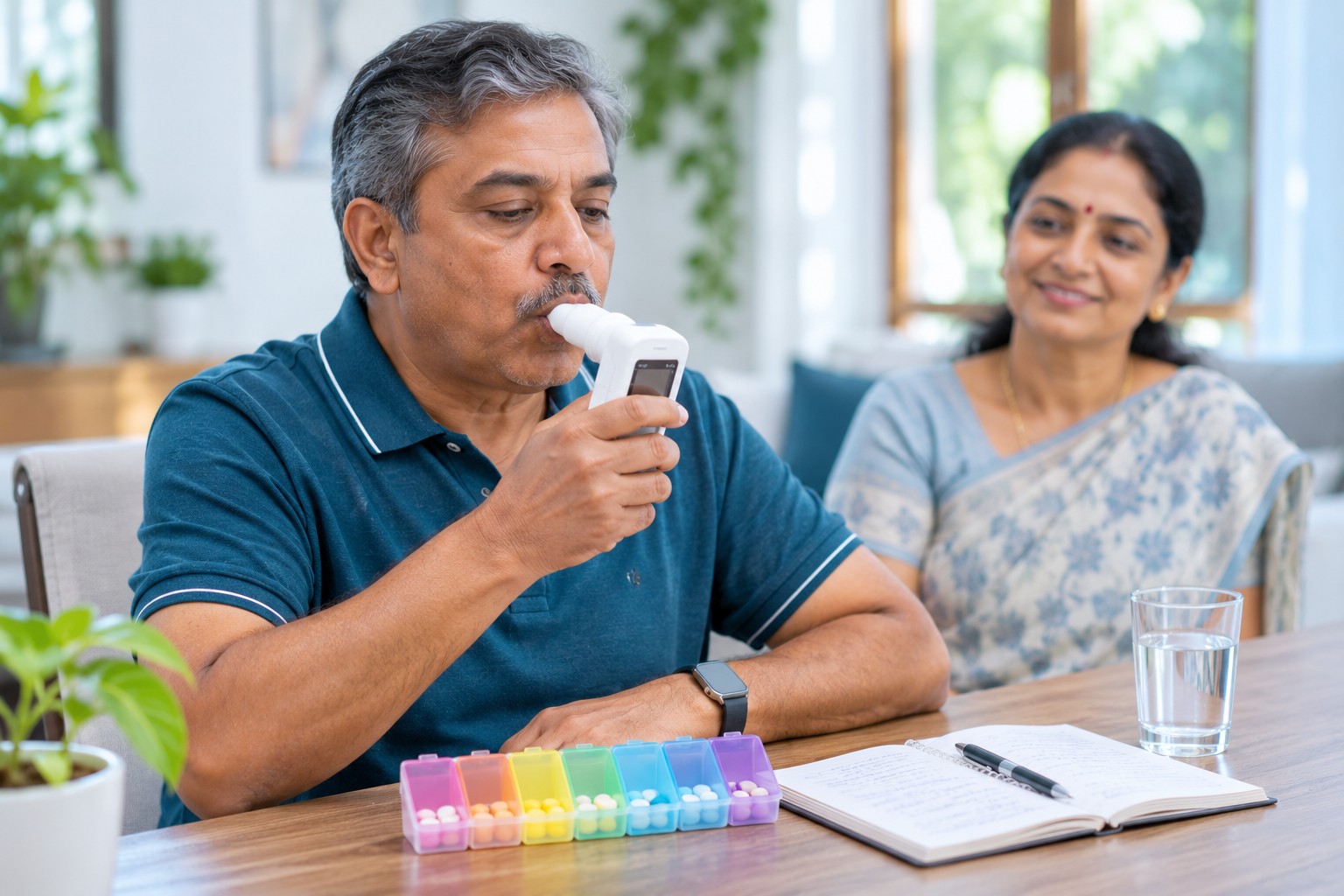
Most lung transplant programmes give recipients a small handheld spirometer. Each day, you take a deep breath and blow out as hard and fast as you can. The device measures your FEV1, the amount of air you can blow out in one second. It is the single most useful number for tracking the health of your new lungs.
Why does it matter? Infection and rejection can begin quietly, before you feel unwell. Early research in lung recipients found that rejection and infection episodes were often associated with a fall of around 10% in FEV1, and studies suggested that a persistent drop of that size should prompt a call to the transplant team.
Call your transplant team the same day if:
- Your FEV1 falls by 10% or more compared with your usual recent readings, and stays low on repeat testing the next day
- You have fever, new cough, more breathlessness or new phlegm, even if your reading looks fine
- Your oxygen saturation is lower than usual
A recent study of recipients using connected home spirometers found that only a small fraction of significant drops were reported by patients, but when they were reported, treatment changed in most cases. In other words, the habit works only if you act on it.
Tips for accurate home readings
- Test at the same time each day, ideally before your morning medicines.
- Sit upright, take the deepest breath you can, seal your lips around the mouthpiece and blast out hard.
- Do three blows and record the best one.
- Bring your logbook or app readings to every clinic visit.
Rejection and CLAD, Explained Simply
Your immune system is designed to attack anything it sees as foreign, and your new lungs fall into that category. Anti-rejection medicines keep this response under control, but rejection can still happen.
Most common in the first year. Often detected on biopsy or by a drop in spirometry. Usually treatable with adjusted medicines, especially when caught early.
A slower, lasting loss of lung function, usually after the first year. It is the leading long-term challenge after lung transplant.
Chronic lung allograft dysfunction (CLAD) is defined by international consensus as a persistent decline of 20% or more in FEV1 from your best post-transplant baseline, after other causes such as infection have been ruled out. Research reports that CLAD affects roughly half of recipients within five years.
That statistic sounds frightening, so here is the important context. CLAD often progresses gradually, many people live active lives for years after it is detected, and early recognition gives your team more options to slow it. The things that lower your risk are also things you control: taking medicines exactly on time, reporting drops in spirometry promptly, treating acid reflux if you have it, and avoiding infections.
Living With Anti-Rejection Medicines
Most recipients take a combination of three types of medicine: a calcineurin inhibitor such as tacrolimus, an antiproliferative agent such as mycophenolate, and a low dose of steroid. You will also take medicines to prevent certain infections, especially in the first year.
The golden rules
- Take them on time, every time. Tacrolimus levels are measured in your blood, so timing matters.
- Never stop or change a dose without speaking to your transplant team, even if you feel perfectly well.
- Check before taking anything new, including antibiotics, painkillers, herbal or ayurvedic products. Some interact strongly with tacrolimus.
- Avoid grapefruit and pomelo, which can raise tacrolimus to unsafe levels.
- Use a pill organiser and phone alarms. Missed doses are one of the most avoidable causes of rejection.
Side effects worth knowing about
Long-term anti-rejection medicines can affect kidney function, blood sugar, blood pressure, cholesterol and bone strength. They also increase the risk of some cancers, particularly skin cancer. That is why your follow-up includes regular blood tests, and why sun protection with a hat, full sleeves and sunscreen is a lifelong habit worth building.
Protecting Your New Lungs From Infection
Your new lungs meet the outside world with every breath, and your immune system is deliberately turned down. A few practical habits make a big difference:
- Hand hygiene before eating, after travel and after touching shared surfaces.
- Wear a well-fitted mask in crowded places, hospitals and public transport, especially in the first year and during flu season.
- Avoid construction sites, dusty renovation work, compost and mouldy areas, which carry fungal spores.
- Stay away from people who are unwell with colds, flu, chickenpox or tuberculosis.
- Follow food safety: freshly cooked food, boiled or filtered water, washed fruit and vegetables, and avoid street food, raw eggs and unpasteurised milk.
- Take vaccines your team recommends. Live vaccines are generally avoided after transplant, so always check first.
Work, Travel, Food and Family Life
Going back to work
Many recipients return to work, often between six and twelve months after transplant, depending on the job. Office and desk work is usually easier to resume than jobs involving dust, chemicals, heavy labour or crowded environments. International registry data show that a significant proportion of five-year survivors are working at least part-time.
Travel
Local travel is usually possible within months. For longer trips or flights, plan ahead with your team: carry extra medicines in your hand luggage, keep a copy of your prescription and transplant summary, and know where the nearest transplant-aware hospital is at your destination.
Exercise
Walking, cycling, swimming in well-maintained pools once cleared, yoga and light strength training help keep your new lungs and your muscles strong. Your rehab team will guide progression.
Family and intimacy
Most people can resume normal family life and intimacy once wounds have healed. Pregnancy after lung transplant needs careful advance planning with your transplant team, because some medicines must be changed beforehand.
The Long-Term Outlook, Honestly
Lung transplant outcomes have improved over the decades. According to International Society for Heart and Lung Transplantation registry figures, about 85% of adult recipients are alive one year after transplant and around 59% at five years, with many people living well beyond ten years. Survival is generally better after double lung transplant and in those who survive the first year.
Numbers describe groups, not individuals. Your own outlook depends on your age, your underlying disease, your overall health and, very importantly, how closely you follow your care plan. Recipients who keep their appointments, take medicines faithfully and report changes early give themselves the best possible chance.
Planning for life after a lung transplant?
Whether you are considering a transplant, recently had one or want a second opinion on your follow-up care, our team is here to help. Dr. Asher George Joseph is a heart and lung transplant surgeon at SPARSH Hospital, Yeshwanthpur, Bengaluru, with specialist transplant training from Manchester, UK.
Frequently Asked Questions
How long does it take to recover from a lung transplant?
Most patients spend a few weeks in hospital and stay close to the transplant centre for the first two to three months. Strength and stamina improve steadily over six to twelve months, and many people resume light work and normal daily activities within the first year.
What are the signs of rejection after a lung transplant?
Warning signs include increasing breathlessness, cough, fever, tiredness, lower oxygen levels and a fall of 10% or more in home spirometry readings. Rejection can also occur with no symptoms, which is why regular tests and daily spirometry matter.
What is CLAD after lung transplant?
Chronic lung allograft dysfunction is a lasting decline in lung function, defined as a persistent fall of 20% or more in FEV1 from the best post-transplant value. It is the main long-term complication and affects about half of recipients within five years.
Do I need to take anti-rejection medicines for life?
Yes. Anti-rejection medicines are needed lifelong to prevent your immune system from attacking the new lungs. Doses may be reduced over time, but they should never be stopped without your transplant team’s advice.
Can I return to work after a lung transplant?
Many recipients return to work, often six to twelve months after surgery. Jobs that involve dust, chemicals, heavy physical labour or crowds may need modification or a longer recovery period.
What is the life expectancy after a lung transplant?
International registry data show about 85% one-year and around 59% five-year survival, with many recipients living beyond ten years. Individual outlook depends on age, underlying disease, overall health and close adherence to follow-up care.
This article is for general education and does not replace advice from your transplant team, whose instructions should always come first. Patient stories are composites, shared to protect privacy.
- Verleden GM, et al. Chronic lung allograft dysfunction: definition, diagnostic criteria and approaches to treatment. A consensus report from the Pulmonary Council of the ISHLT. J Heart Lung Transplant. 2019.
- Saez Gimenez B, et al. Chronic lung allograft dysfunction after lung transplantation. Review.
- Bjortuft O, et al. Daily home spirometry facilitates early detection of rejection in single lung transplant recipients. Eur Respir J. 1993;6:705–708.
- Adherence and quality assurance of home spirometry in lung transplant recipients. Eur Respir J. 2025;66(Suppl 69):PA5946.
- ISHLT International Thoracic Organ Transplant Registry reports.