It is 2 a.m., three nights after discharge. Ramesh, 58, is awake again. His chest feels tight around the stitches, his leg is swollen where the vein was taken, and he has barely eaten in two days. His wife is sitting beside him with the phone in her hand, wondering: is this normal, or should we rush back to the hospital?
If you or someone you love has just come home after bypass surgery (CABG), valve surgery or any open-heart operation, you will almost certainly face a night like this. The hospital phase has a team watching every heartbeat. The first six weeks at home are different. You and your family become the monitoring team.
This guide walks you through recovery after heart surgery the way we explain it to patients in clinic: what is expected, what is not, how to protect your healing breastbone, and the specific warning signs that mean you should call your surgeon today rather than “wait and see”.
Ramesh is a composite example based on common patient experiences, not a single real patient.
✔️ Key Takeaways
- Most people feel tired, sore, low in appetite and emotionally up and down for the first 2–3 weeks. These are expected and usually improve week by week.
- Your breastbone (sternum) heals much like a fracture, over roughly 6–8 weeks. Protect it, but do not stop moving.
- Walking is your most important medicine. Start small, several times a day, and build up steadily.
- Fever, a wound that is red or leaking, a clicking breastbone, sudden weight gain, a racing heartbeat or new breathlessness are not things to wait out. Call your surgical team.
- Never stop blood thinners, statins or heart medicines on your own, even if you feel well.
- Ask about cardiac rehabilitation. It is one of the best-proven ways to recover faster and stay well.
Your Week-by-Week Recovery Timeline After Heart Surgery
Every patient heals at a different pace. Age, diabetes, kidney function, how strong the heart was before surgery and the type of operation all play a role. Still, most people follow a broadly similar pattern.
| Period | How you may feel | What to focus on |
|---|---|---|
| Week 1–2 | Tired easily, sore chest, poor appetite, broken sleep, low mood on some days | Short walks 4–6 times a day, wound care, medicines on time, rest between activities |
| Week 3–4 | More energy, longer walks, appetite returning, still tired by evening | Walk 15–20 minutes at a time, light household tasks, first follow-up visit |
| Week 5–6 | Close to your usual self on good days, chest discomfort much less | Walk 30 minutes most days, discuss driving and returning to desk work, start cardiac rehab |
| Week 6–12 | Breastbone largely healed, stamina still building | Gradually return to lifting, exercise and full activity as cleared by your surgeon |
A typical pattern after uncomplicated open-heart surgery. Your surgeon may give you different advice based on your operation.
What Feels Worrying but Is Usually Normal
Many of the calls we receive in the first fortnight are about symptoms that feel alarming but are a routine part of healing. Knowing about them in advance can save a lot of sleepless nights.
Tiredness that comes in waves
Your body is repairing a large surgical wound and recovering from anaesthesia and the heart-lung machine (if one was used). It is common to feel good one morning and exhausted by afternoon. Plan rest between activities rather than doing everything at once.
Numbness, tingling or itching around the incision
Small skin nerves are cut during surgery. Numbness on either side of the chest scar, or along the leg if a vein was taken, can last for several months. Itching is usually a sign of healing.
Leg swelling on the side where the vein was taken
If your bypass used a vein from the leg, that leg often swells, especially by evening. Raising the leg on a pillow when you sit, avoiding crossing your legs, and wearing stockings if advised usually helps.
Poor appetite and a strange taste in the mouth
Medicines and anaesthesia can dull your appetite and change how food tastes for a few weeks. Small, frequent, protein-rich meals work better than three large ones.
Trouble sleeping
Pain, sleeping on your back, daytime naps and the emotional effect of surgery all disturb sleep. A regular bedtime, short daytime naps, and taking prescribed pain relief before bed can help.
Constipation
Pain medicines, less movement and a change in diet make this very common. Fluids (unless you have been told to restrict them), fruit, fibre and walking help. Ask before using any strong laxative.
Muscle aches in the shoulders and upper back
During surgery the chest is held open, which strains shoulder and back muscles. These aches settle over a few weeks.
🩺 A useful rule of thumb
A symptom that is slowly getting better day by day is usually part of recovery. A symptom that is new, suddenly worse, or getting worse each day needs a call to your team.
Red Flags: When to Call Your Surgeon
This is the most important section of this article. Please share it with whoever is looking after you at home.
🚨 Call an ambulance (108) or go to the emergency department immediately if you have
- Chest pain that feels like your old heart pain (angina), or pressure that is not the usual incision soreness
- Severe breathlessness, especially at rest or when lying flat
- Fainting, or feeling like you are about to collapse
- Sudden weakness of the face, arm or leg, slurred speech or confusion (possible stroke)
- Coughing up blood, or bleeding from the wound that does not stop with pressure
⚠️ Call your surgical team the same day if you notice
- Fever above 38°C (100.4°F), chills or shivering
- Wound changes: increasing redness, warmth, swelling, pus or fluid leaking, or edges pulling apart
- A clicking, popping or grinding feeling in the breastbone when you move or cough
- Weight gain of more than 1 kg in a day or 2 kg in a week, which can mean fluid build-up
- A racing, pounding or irregular heartbeat that does not settle
- New or worsening swelling of the legs, or pain in the calf
- Breathlessness that is getting worse rather than better
- Persistent vomiting, or being unable to take your medicines
A racing or irregular heartbeat deserves a special mention. Atrial fibrillation, an irregular heart rhythm, is one of the most common problems after heart surgery, particularly in the first week or two. It is usually treatable, but it needs to be checked because it can affect blood pressure and increase the risk of clots.
Protecting Your Breastbone While It Heals
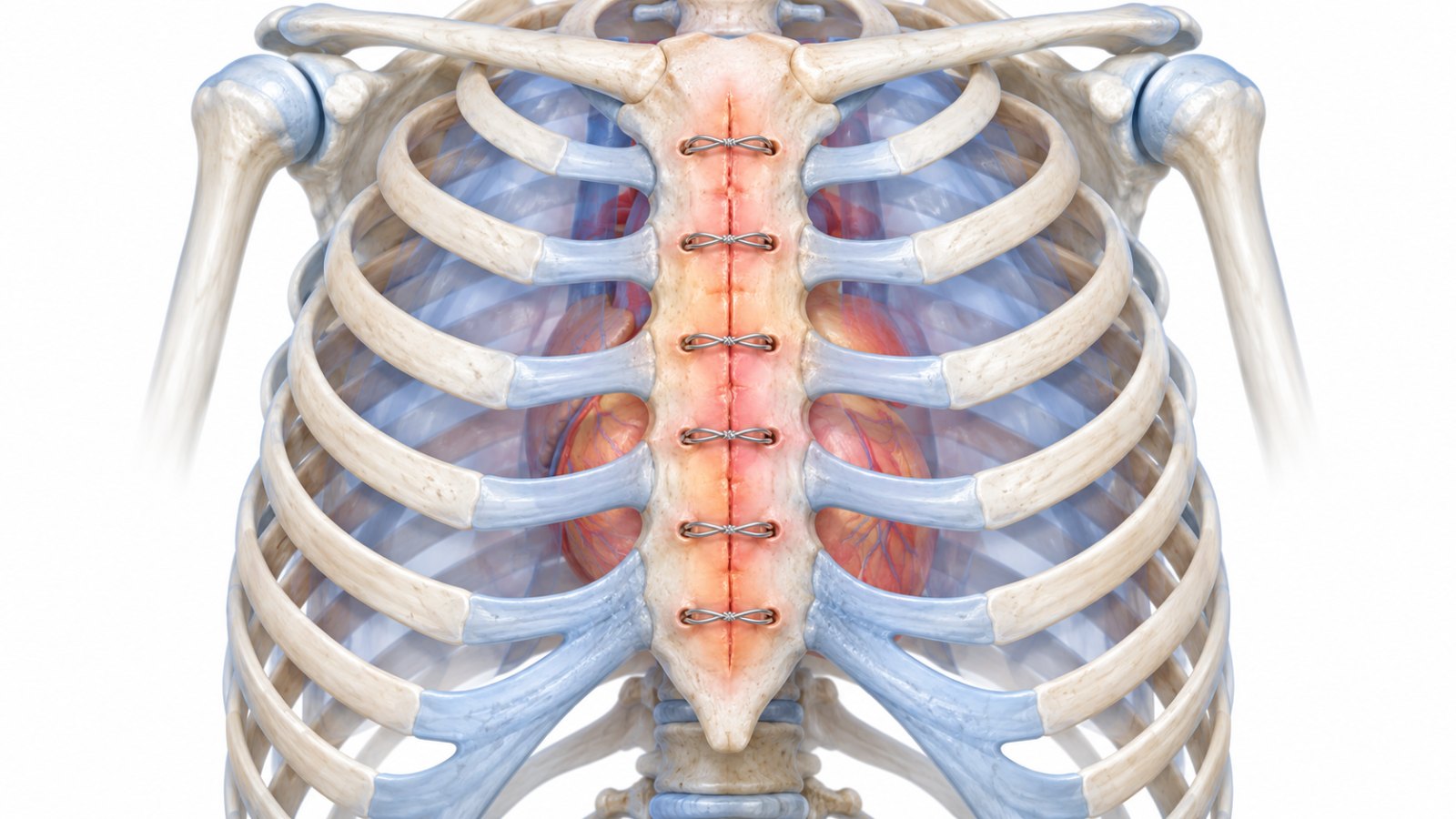
In most open-heart operations, the breastbone is divided and then closed with strong steel wires. Those wires hold the bone together while it knits, in much the same way a plaster cast holds a broken arm. Full bony healing takes roughly six to eight weeks, sometimes longer in people with diabetes, osteoporosis or a chronic cough.
The goal is to avoid movements that pull the two halves of the bone apart. Many heart centres now teach this with a simple idea called “Keep Your Move in the Tube”: imagine your upper arms are inside a narrow tube around your body. Keeping your elbows close to your sides when you push, pull or lift reduces the strain on your breastbone.
Practical sternum-friendly habits
- Hug a pillow firmly against your chest when you cough, sneeze or laugh.
- Getting out of bed: roll onto your side, drop your legs over the edge, and push up with your arms close to your body. Avoid pulling on bed rails or using one arm to haul yourself up.
- Getting up from a chair: shuffle to the front edge, lean forward with “nose over toes”, and stand using your legs, not by pushing hard with both arms.
- No heavy lifting for the first six to eight weeks. A full bucket of water, a gas cylinder, a suitcase or a grandchild all count. Your surgeon will tell you your personal limit.
- Avoid pushing a car, pulling a stuck door, or reaching both arms high above your head while carrying weight.
Walking: Your Most Important Medicine
Patients are often surprised by how much we insist on walking. Walking improves circulation, lowers the risk of blood clots and chest infections, strengthens the heart, lifts mood and helps sleep.
- Start small: 5–10 minutes at an easy pace, four to six times a day, in the first week.
- Build up gradually: add a few minutes every few days. Many people reach 30 minutes in one go by around week six.
- Use the talk test: you should be able to talk in full sentences while walking. If you cannot, slow down.
- Choose the time and place: walk on level ground. In Bengaluru, early mornings and evenings are usually more comfortable than mid-afternoon. Avoid walking straight after a heavy meal.
- Stairs are fine: take them slowly, rest if needed, and use the handrail lightly.
💡 Keep a simple walking diary
Note the date, minutes walked and how you felt. It turns recovery into visible progress, keeps you motivated on low days, and gives your doctor useful information at follow-up.
Caring for Your Wound at Home
A clean, dry wound is the best protection against infection. Wound infection is uncommon, but the risk is higher in people with diabetes, obesity, smoking history or chronic lung disease.
- Shower daily with lukewarm water and mild, unperfumed soap. Let the water run over the wound; do not scrub.
- Pat dry with a clean towel kept only for you.
- Avoid creams, powders, oils or home remedies on the incision unless your team recommends them.
- Avoid soaking in a bathtub or swimming until the wound has fully healed.
- Wear soft, loose cotton clothing. Women often find a well-fitting, front-opening, non-wired bra more comfortable and supportive.
- If you have diabetes, keep your blood sugar well controlled. High sugar levels slow wound healing and increase infection risk.
Medicines: What Not to Stop
After heart surgery you may go home with more tablets than you have ever taken. Each one has a job.
- Antiplatelets (such as aspirin) and statins protect your bypass grafts and native arteries. Stopping them without advice can increase the risk of graft blockage or a heart attack.
- Beta-blockers and other rhythm or blood-pressure medicines help protect against irregular heartbeats and reduce strain on the heart.
- Anticoagulants (such as warfarin or acenocoumarol) are essential if you have a mechanical valve or atrial fibrillation. They need regular INR blood tests.
- Diuretics (water tablets) remove extra fluid. Weigh yourself every morning so your doctor can adjust the dose.
Use a pill organiser, keep an updated medicine list in your wallet or phone, and check with your surgical team before taking any new medicine, including over-the-counter painkillers. Some common painkillers (such as ibuprofen and similar drugs) can affect the kidneys, fluid balance and bleeding, so ask before you take them.
Eating to Heal: The Indian Kitchen Edition
Your body needs protein and calories to repair tissue, and less salt to avoid fluid build-up.
- Protein at every meal: dal, sprouts, curd, paneer, eggs, fish or chicken, according to your preferences.
- Go easy on salt: pickles, papad, namkeen, chips, ready-made masalas, bakery items and restaurant food are often far saltier than people realise.
- Choose cooking oil wisely and avoid deep-fried snacks.
- Fruit and vegetables help with fibre, vitamins and constipation.
- Fluids: some patients, especially those with weak heart function, are asked to limit fluids. Follow your personal instructions.
- No alcohol in the early weeks, and no smoking or tobacco, ever. Smoking slows healing and is one of the biggest causes of grafts blocking again.
The Emotional Side of Recovery
Very few patients are warned about this, yet many experience it: sudden tearfulness, irritability, anxiety about every twinge, or a feeling that “I am not the same person”. Some notice poor concentration or forgetfulness for a few weeks.
These feelings are common after major surgery and usually improve as energy returns. Talking about them helps. Family members can make a big difference by being patient, encouraging walking, and gently noticing if low mood persists.
🩺 When low mood needs attention
If sadness, hopelessness, anxiety or poor sleep continue beyond two to three weeks, or interfere with eating, walking or taking medicines, tell your doctor. Depression after heart surgery is treatable, and treating it supports physical recovery too.
Driving, Work, Intimacy and Travel
When can I drive after heart surgery?
Most surgeons advise not driving for at least four to six weeks. Steering and sudden braking put strain on the breastbone, and some medicines affect reaction time. You can travel as a passenger; holding a small pillow between your chest and the seatbelt makes it more comfortable.
When can I return to work?
People with desk-based work often return around four to eight weeks, sometimes part-time to begin with. Physically demanding work usually needs eight to twelve weeks or longer. Discuss your actual job with your surgeon.
When is sexual activity safe?
Many patients are too shy to ask. A common guide is that if you can comfortably walk briskly or climb two flights of stairs without chest pain or marked breathlessness, intimacy is usually safe, often from around four to six weeks. Avoid positions that put weight on your arms or chest until the breastbone has healed. Speak to your doctor before taking any medicines for erectile dysfunction, as some can interact dangerously with heart medicines.
Can I fly or travel?
Short journeys by car are fine as a passenger once you feel comfortable. For flights and long trips, check with your surgeon first, carry a medicine list and discharge summary, and walk regularly during the journey.
Why Cardiac Rehabilitation Matters
Cardiac rehabilitation is a supervised programme of exercise, education and support, usually starting a few weeks after surgery. Large studies show that it improves fitness and quality of life and lowers the risk of hospital readmission. It also gives you the confidence to exercise safely, because your heart rate and blood pressure are monitored as you push yourself a little further each week.
If you were not referred, ask your surgical team about it at your first follow-up visit. Still preparing for surgery? Our list of 25 questions to ask your cardiac surgeon before heart surgery is a good place to start.
✔️ For family members and caregivers
- Keep the discharge summary, medicine list and surgical team’s phone number in one easy-to-find place.
- Help with the morning weight, blood sugar and blood pressure checks, and note them in a diary.
- Encourage walking, but let the patient set the pace.
- Look after yourself too. Caring for someone after heart surgery is tiring, and it is okay to ask for help.
Recovering from heart surgery, or preparing for one?
Clear answers make recovery calmer and safer. Dr. Asher George Joseph and his team guide patients and families through every stage of heart and lung surgery, from the decision to operate to the months after going home.
Frequently Asked Questions
How long does it take to fully recover from open-heart surgery?
Most people feel substantially better by six to eight weeks, when the breastbone has largely healed. Full recovery of energy and stamina often takes around three months, and sometimes longer for older patients or those who were very unwell before surgery.
Is chest pain normal after bypass surgery?
Soreness around the incision, the breastbone and the chest wall muscles is normal and gradually improves. Pain that feels like your old angina, pressure in the chest, or pain with breathlessness, sweating or nausea is not normal and needs urgent medical attention.
How should I sleep after heart surgery?
Most people sleep on their back for the first few weeks, often propped up on pillows. Many can turn onto their side after two to four weeks if it is comfortable. Avoid sleeping on your stomach until your surgeon says the breastbone has healed.
Why is my leg swollen after bypass surgery?
If a vein was taken from your leg for the bypass, swelling on that side is common for several weeks. Raising the leg and walking regularly help. Increasing swelling, redness, warmth or calf pain should be checked by your team.
How much weight can I lift after heart surgery?
Most surgeons advise avoiding heavy lifting for six to eight weeks while the breastbone heals. Your surgeon will give you a personal limit based on your surgery and bone healing. Keep your elbows close to your body when lifting anything.
When can I start exercising after heart surgery?
Walking starts from day one at home. Structured exercise is best started through a cardiac rehabilitation programme, usually a few weeks after surgery. Avoid heavy weights, push-ups and sports that strain the chest until your surgeon clears you.