Donor hearts are limited in India, and waiting times can be long. For some patients with a very weak heart, waiting is not safe. Their heart may keep getting weaker, and other organs may start to fail. This is where an LVAD can help.
In this article, we explain what an LVAD is, how it works, who may need one, and what life looks like with this heart pump.
What is an LVAD?
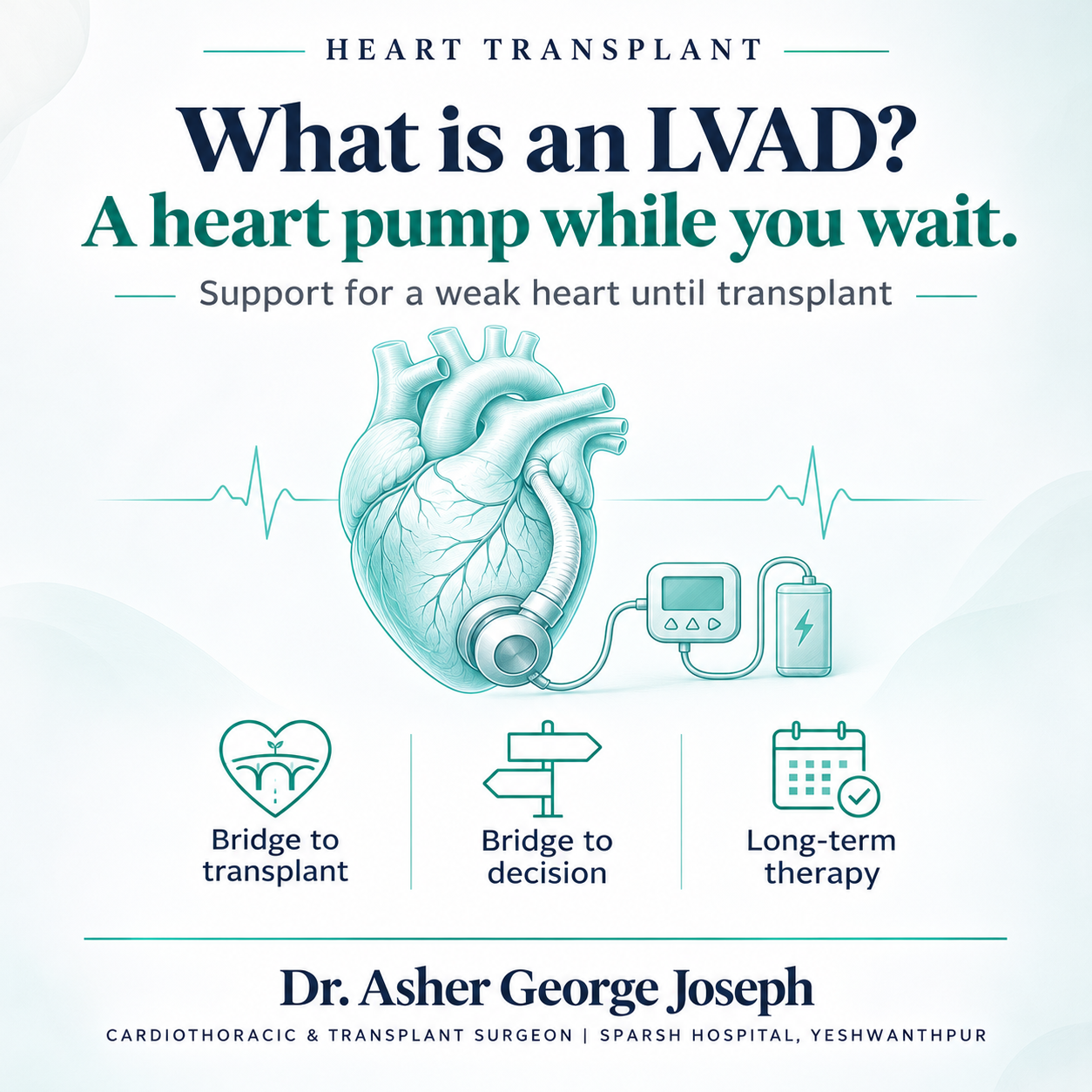
LVAD stands for Left Ventricular Assist Device. It is a small mechanical pump placed inside the chest during heart surgery. It helps the left ventricle, the heart’s main pumping chamber, send blood to the rest of the body.
An LVAD does not replace your heart. Your own heart stays in place, and the pump works alongside it to do the job your weak heart cannot manage on its own.
How does an LVAD work?
- The pump is attached to the bottom (apex) of the left ventricle.
- It draws blood from the heart and pushes it into the aorta, the main artery that carries blood to the body.
- A thin cable called a driveline passes out through the skin of the abdomen.
- The driveline connects to a small controller and batteries, which you carry in a bag or vest.
- At night, or when resting at home, the system can be connected to a power unit.
Modern LVADs are small, quiet and continuous-flow pumps. Because of this, some patients with an LVAD may not have a normal pulse that can be felt at the wrist. This is expected.
Who may need an LVAD?
An LVAD is considered for patients with advanced heart failure whose symptoms continue despite the best medicines. It is used in three main situations:
Bridge to transplant
The patient is waiting for a donor heart, but the heart is getting weaker. The LVAD keeps the body well supplied with blood and keeps other organs healthy until a heart becomes available.
Bridge to decision (or candidacy)
The patient is not yet eligible for a transplant, for example because of kidney problems or high lung pressures caused by heart failure. Better blood flow with an LVAD can improve these problems, and the patient may become eligible later.
Long-term (destination) therapy
For some patients who cannot have a transplant, the LVAD becomes the long-term treatment, helping them live longer with better quality of life.
Signs that you may need advanced heart failure treatment
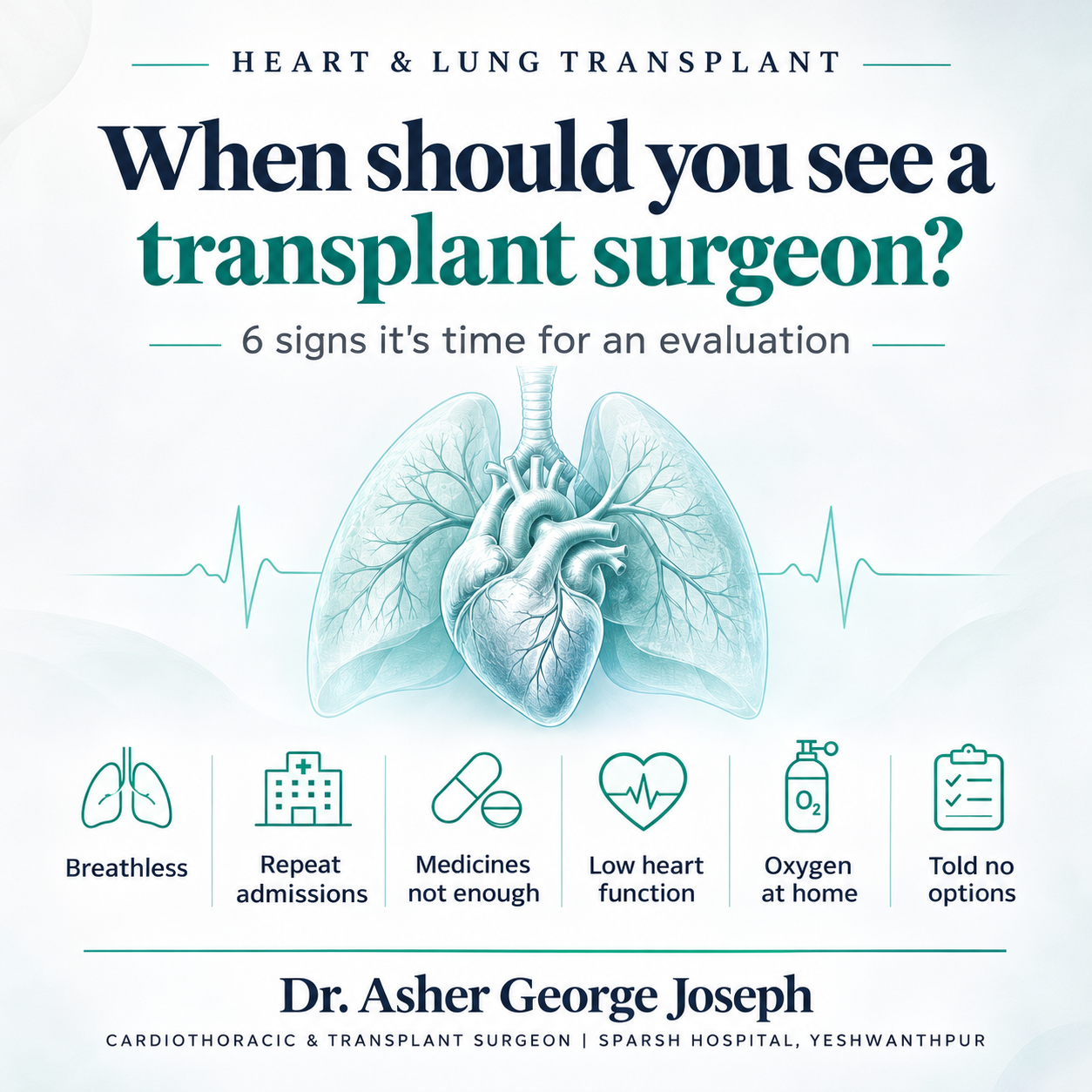
- Breathlessness while resting or doing very little activity
- Repeated hospital admissions for heart failure
- A very low heart pumping function (ejection fraction) on echo
- Needing intravenous medicines to keep the heart going
- Kidney or liver function getting worse because of poor blood flow
What is life like with an LVAD?
After recovery, many patients feel less breathless and have more energy. They can walk, travel, spend time with family and return to many daily activities. Some patients return to work.
Living with an LVAD also means taking on some daily responsibilities:
- Driveline care: keep the exit site clean and dressed to prevent infection.
- Power: always carry fully charged spare batteries. The pump must never run out of power.
- Blood thinners: take them exactly as advised and get blood tests done regularly.
- Water safety: no swimming or bathing in a tub. Showering needs special precautions as advised by your team.
- Regular check-ups: with the LVAD team to check the pump settings, medicines and overall health.
What are the risks?
Like any major treatment, an LVAD has risks. These include infection at the driveline, bleeding, blood clots, stroke and, rarely, pump problems. Careful daily care and regular follow-up help reduce these risks. Your team will explain your personal risks before deciding on the device.
Frequently Asked Questions
Is an LVAD the same as an artificial heart?
No. An LVAD supports your own heart. A total artificial heart replaces it, and is used much less often.
Can I still get a heart transplant after an LVAD?
Yes. Many patients receive a heart transplant while on an LVAD. The pump is removed during the transplant surgery.
Does the LVAD make noise?
Modern pumps are very quiet. You may hear a soft hum when the area is silent.
Can I travel with an LVAD?
Yes, with planning. Carry spare batteries, your controller and a letter from your LVAD team.
The key message
A weak heart does not always mean waiting helplessly. An LVAD can keep you stronger and safer until a heart transplant, and for some patients it can be a long-term solution.
Want to know if an LVAD or heart transplant is right for you? Book a consultation with Dr Asher George Joseph, Cardiothoracic & Transplant Surgeon at SPARSH Hospital, Yeshwanthpur, Bengaluru.