Severe aortic stenosis is one of the most common and life-threatening valvular heart diseases seen in clinical practice today. As populations age and the burden of comorbidities increases, cardiac surgeons are frequently challenged with patients who are at high or prohibitive risk for conventional open-heart surgery. In this evolving landscape, minimally invasive sutureless aortic valve replacement (SU-AVR) has emerged as a powerful and reliable surgical solution.
This blog explores the procedure from a different clinical and surgical perspective, focusing on anatomical complexity, patient selection, procedural planning, technological evolution, and real-world outcomes. It highlights how SU-AVR is reshaping the future of surgical aortic valve replacement, particularly for high-risk patients.
Understanding Severe Aortic Stenosis in High-Risk Patients
Aortic stenosis is characterized by progressive narrowing of the aortic valve due to calcification and fibrosis. As the valve opening reduces, the heart must work harder to pump blood into the systemic circulation. Over time, this leads to left ventricular hypertrophy, heart failure, and increased mortality if left untreated.
Common Symptoms
- Progressive breathlessness
- Chest pain or tightness
- Dizziness or fainting spells
- Reduced exercise tolerance
- Symptoms of heart failure
In high-risk patients, these symptoms are often compounded by additional factors such as advanced age, diabetes, chronic kidney disease, lung disease, or reduced heart function. These comorbidities significantly increase the risk of complications with conventional sternotomy-based valve replacement.
Limitations of Conventional Aortic Valve Replacement
Traditional surgical aortic valve replacement requires a full sternotomy, cardiopulmonary bypass, and prolonged aortic cross-clamp time. While effective, this approach may not be ideal for all patients.
Challenges in High-Risk Patients
- Longer operative and anesthesia time
- Increased bleeding and transfusion requirements
- Higher risk of infection and respiratory complications
- Delayed recovery and prolonged hospital stay
Patients with small aortic roots or complex valve anatomy present an additional challenge, as achieving optimal valve sizing without causing patient-prosthesis mismatch can be difficult.
The Evolution of Sutureless Aortic Valve Technology
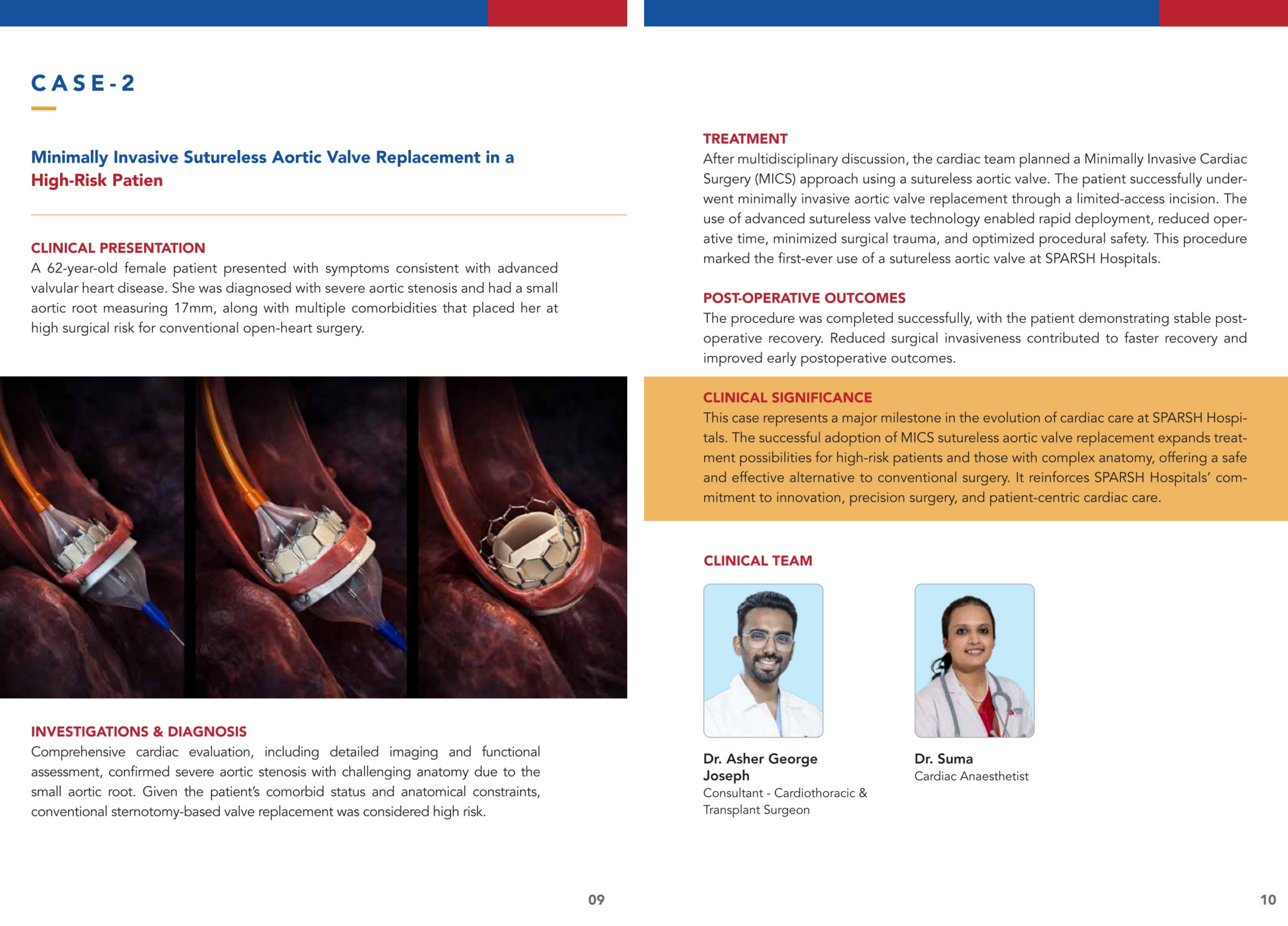
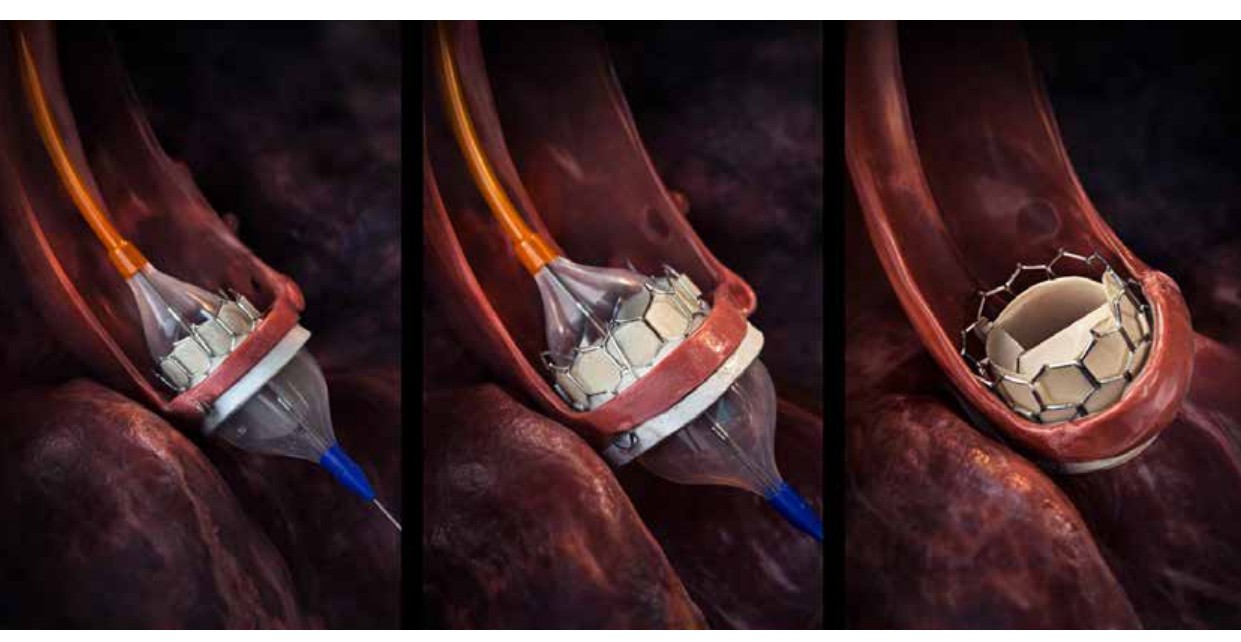
Sutureless aortic valves were developed to address many of these challenges. Unlike conventional bioprosthetic valves that require multiple sutures for fixation, sutureless valves are designed to be implanted rapidly using self-expanding or balloon-expandable mechanisms.
Key Features of Sutureless Valves
- No need for multiple annular sutures
- Rapid deployment and secure anchoring
- Reduced cardiopulmonary bypass time
- Shorter aortic cross-clamp duration
When combined with minimally invasive surgical access, sutureless valves offer the benefits of open surgery while significantly reducing surgical trauma.
A Different Projection: Focusing on Anatomy Rather Than Age
Modern cardiac surgery increasingly emphasizes anatomy-based decision-making rather than relying solely on chronological age.
Small Aortic Root and Complex Anatomy
Patients with a small aortic root, such as those with annular dimensions around 17 mm, face a higher risk of patient-prosthesis mismatch. Traditional valve replacement in such cases may require complex root enlargement procedures, which increase operative risk.
Sutureless valves provide an elegant solution by allowing:
- Implantation of an adequately sized valve
- Improved effective orifice area
- Lower transvalvular gradients
- Avoidance of complex root enlargement
This makes SU-AVR particularly valuable in high-risk patients with challenging anatomy.
Minimally Invasive Cardiac Surgery: Redefining Access
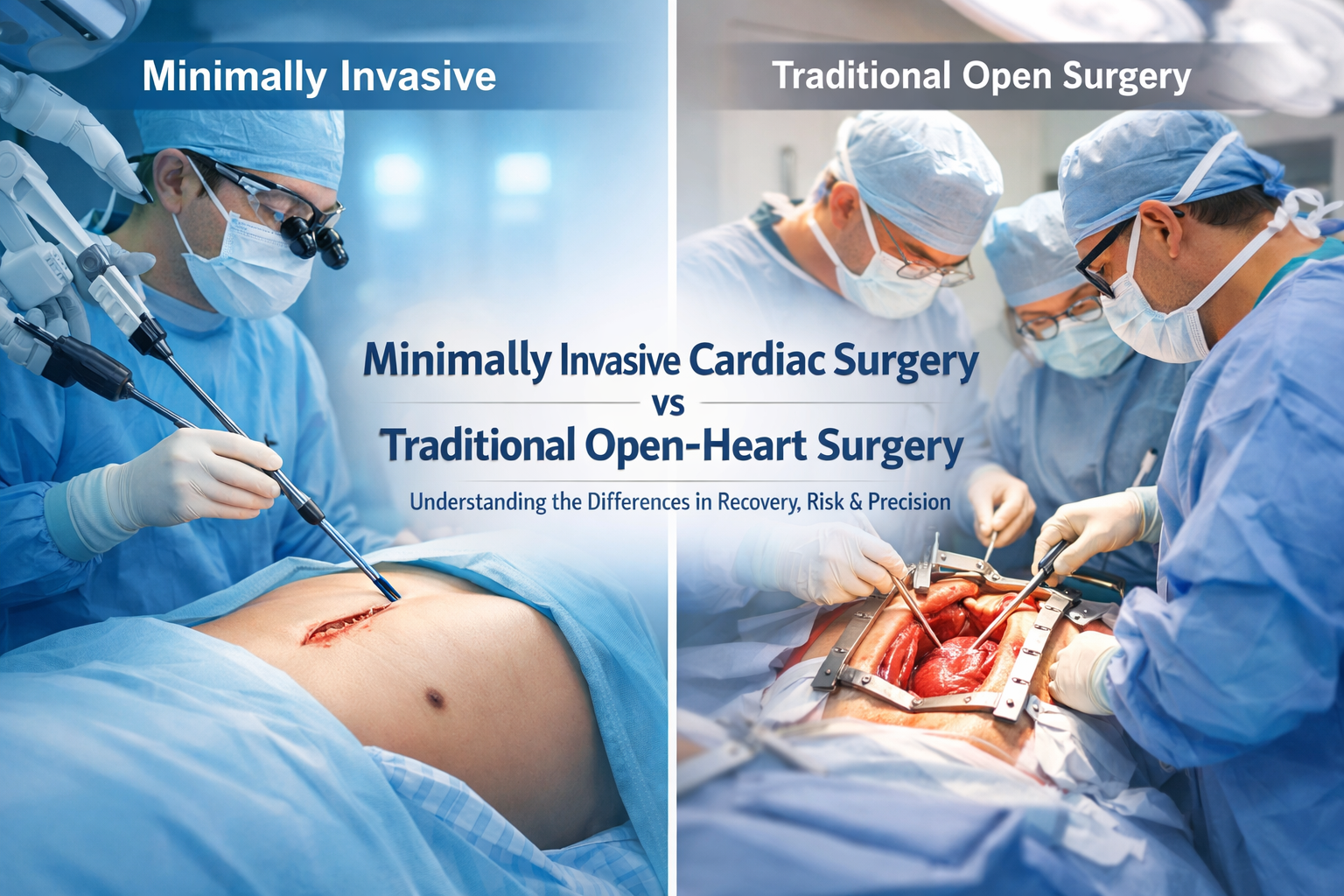
Minimally invasive cardiac surgery (MICS) techniques have transformed how valve surgeries are performed. Instead of a full sternotomy, surgeons use limited-access incisions such as upper mini-sternotomy or right anterior thoracotomy.
Advantages of Minimally Invasive Access
- Reduced surgical trauma
- Lower blood loss
- Less postoperative pain
- Faster mobilization
- Improved cosmetic results
When combined with sutureless valve technology, these approaches significantly reduce operative time, which is crucial for patients with limited physiological reserve.
Multidisciplinary Planning and Precision Execution
Successful SU-AVR relies on meticulous preoperative planning and a collaborative heart team approach. This includes cardiac surgeons, cardiologists, anesthetists, imaging specialists, and perfusionists.
Advanced imaging plays a critical role in:
- Accurate annular measurement
- Assessment of valve calcification
- Evaluation of coronary artery anatomy
- Selection of appropriate valve size
This level of planning ensures procedural safety and optimal outcomes, even in anatomically complex and high-risk patients.
Intraoperative Advantages of Sutureless Valve Implantation
From a surgical standpoint, sutureless valves offer several intraoperative benefits that directly impact patient outcomes.
Surgical Benefits
- Rapid and reproducible implantation
- Reduced myocardial ischemic time
- Minimal manipulation of fragile tissues
- Lower physiological stress during surgery
These advantages are especially important in patients with compromised heart function or multiple comorbidities.
Postoperative Outcomes and Recovery
The benefits of minimally invasive sutureless AVR extend well beyond the operating room. Postoperative recovery is often faster and smoother compared to conventional surgery.
Observed Clinical Outcomes
- Early extubation and mobilization
- Shorter ICU and hospital stay
- Reduced need for blood transfusions
- Stable valve hemodynamics
- Early symptom relief
Patients frequently report improved quality of life within weeks of surgery, highlighting the patient-centered nature of this approach.
Clinical Significance and Future Implications
The adoption of minimally invasive sutureless aortic valve replacement represents a significant milestone in the evolution of cardiac surgery.
Why This Matters
- Expands treatment options for high-risk patients
- Offers a surgical alternative when TAVR is unsuitable
- Combines surgical precision with reduced invasiveness
- Aligns with global trends toward patient-centric care
As experience grows and technology continues to evolve, SU-AVR is expected to play an increasingly important role in modern valve surgery programs.
The Importance of Surgical Expertise
Advanced procedures such as SU-AVR demand a high level of surgical skill and institutional experience. Surgeons trained in minimally invasive techniques and advanced valve technologies are best positioned to deliver safe and consistent outcomes.
Experts like Dr. Asher George Joseph, who specialize in complex cardiac and transplant surgery, exemplify how innovation, precision, and compassionate care can be combined to achieve excellent results in high-risk patients.
Frequently Asked Questions (FAQs)
1. What is sutureless aortic valve replacement?
Sutureless AVR is a surgical technique where a bioprosthetic valve is implanted without traditional sutures, allowing faster deployment and reduced operative time.
2. Who is an ideal candidate for sutureless AVR?
Patients with severe aortic stenosis who are high risk for conventional surgery, those with small aortic roots, or patients requiring minimally invasive approaches may benefit most.
3. How is SU-AVR different from TAVR?
SU-AVR is a surgical procedure performed under direct vision, while TAVR is a catheter-based approach. SU-AVR offers surgical precision and may be preferred when anatomy is unsuitable for TAVR.
4. Is recovery faster with minimally invasive SU-AVR?
Yes. Patients often experience less pain, quicker mobilization, and shorter hospital stays compared to traditional open-heart surgery.
5. Are sutureless valves durable?
Current data shows excellent mid- and long-term durability, comparable to conventional bioprosthetic valves, when implanted correctly.
6. What are the risks associated with SU-AVR?
As with any cardiac surgery, risks include bleeding, infection, rhythm disturbances, or valve-related complications. Careful patient selection and expertise significantly reduce these risks.
7. Can SU-AVR be performed in elderly patients?
Yes. Elderly patients often benefit greatly due to reduced surgical trauma and faster recovery.