Lung transplant surgery is not just a medical procedure—it is a life reset. In Bangalore, this highly complex treatment has evolved into a structured, team-driven journey that blends advanced technology, ethical organ donation, and long-term patient transformation. Unlike routine blogs that focus only on eligibility and cost, this article explores lung transplantation as a continuum of care, from failing lungs to renewed breathing.
When Breathing Becomes a Daily Battle
For patients with end-stage lung disease, everyday activities—walking, talking, even sleeping—become exhausting. Oxygen cylinders become companions, and hospital visits become frequent. A lung transplant is considered not when life ends, but when life must be reimagined.
Conditions that may lead to transplant include:
- End-stage COPD
- Interstitial Lung Disease (ILD) and pulmonary fibrosis
- Pulmonary arterial hypertension
- Advanced bronchiectasis
- Post-COVID irreversible lung damage
- Cystic fibrosis (in selected cases)
Why Bangalore Has Become a Lung Transplant Hub
Bangalore stands out not because of one hospital or surgeon, but due to a complete ecosystem:
- High-volume tertiary care hospitals
- Dedicated multi-disciplinary transplant teams
- Advanced ECMO and ventilatory support
- Robust organ donation and coordination networks
- Long-term post-transplant rehabilitation programs
Leading transplant programs are offered at institutions such as Narayana Health, Manipal Hospitals, Apollo Hospitals, and Aster CMI Hospital, where lung transplantation is supported by cardiothoracic, pulmonary, infectious disease, and critical care specialists working as one unit.
Not Just Surgery: The Lung Transplant Journey
1. The Evaluation Phase – The Most Critical Step
Before surgery, patients undergo an extensive evaluation:
- Pulmonary function tests (PFTs)
- CT chest and pulmonary angiography
- Right heart catheterization
- Cardiac assessment
- Nutritional and psychological evaluation
- Infection screening and immunological matching
This phase determines who will benefit, when, and how safely.
2. The Waiting Period – Medicine Meets Patience
Patients are placed on the transplant waiting list based on:
- Severity of disease
- Blood group compatibility
- Lung size matching
- Urgency score
Some patients may require ECMO (Extracorporeal Membrane Oxygenation) as a bridge to transplant—something Bangalore centers are increasingly experienced with.
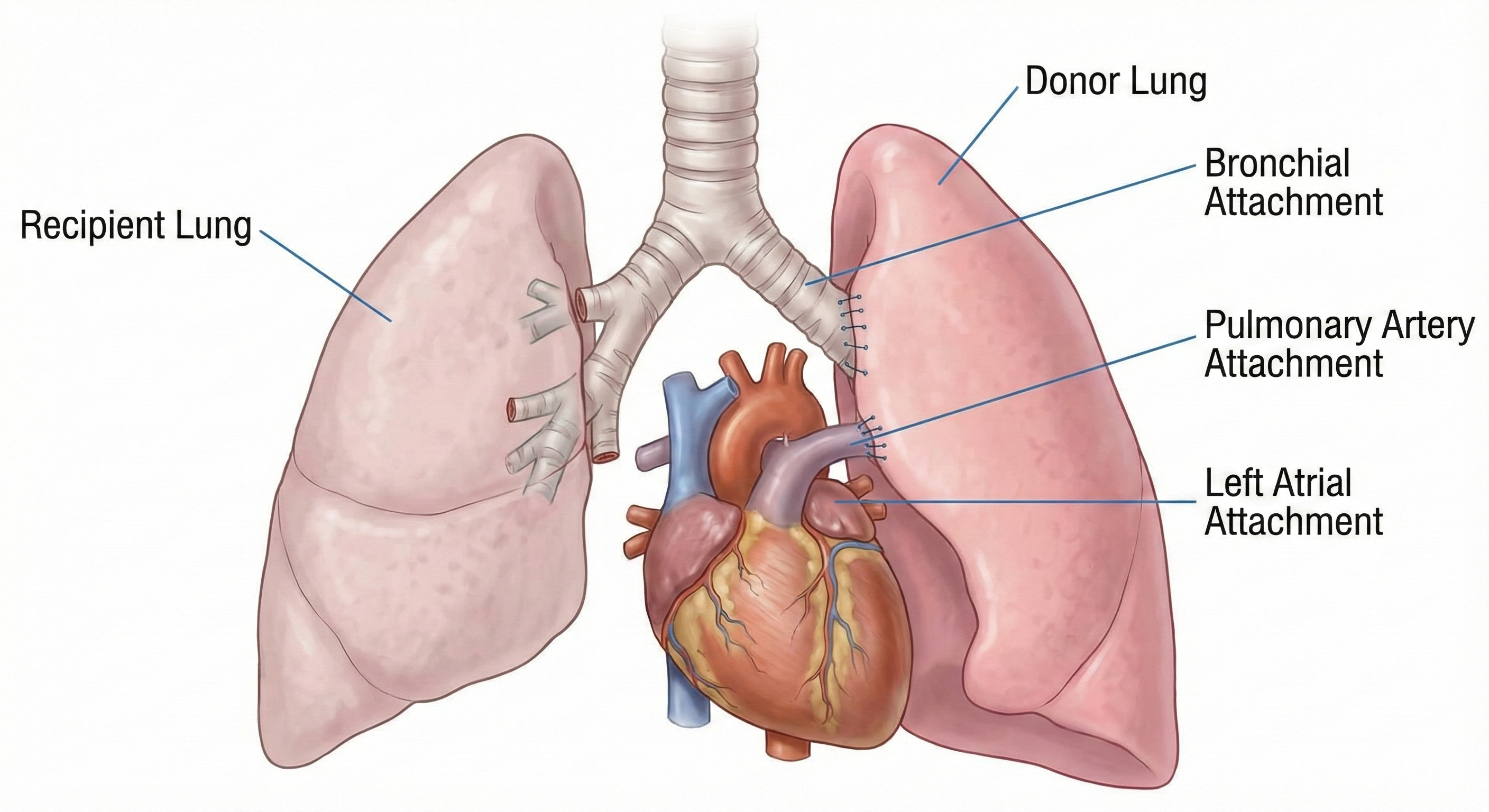
3. The Surgery – Precision Over Speed
Lung transplant surgery can be:
- Single lung transplant
- Double lung transplant
- Rarely, combined heart–lung transplant
The procedure can take 6–10 hours and demands flawless coordination between:
- Retrieval teams
- Anesthesiologists
- Transplant surgeons
- Perfusionists
- ICU specialists
Every minute matters—not just for survival, but for graft function.
Contrary to popular belief, the transplant is not the end goal. Recovery includes:
Immunosuppression Management
Patients require lifelong medications to prevent rejection, with careful monitoring to avoid infections.
Pulmonary Rehabilitation
Structured rehab helps patients:
- Relearn breathing mechanics
- Build stamina
- Return to independent living
Infection Surveillance
Transplant recipients are closely monitored for:
- Bacterial, viral, and fungal infections
- Early signs of graft rejection
Quality of Life: The Most Underrated Outcome
Many post-transplant patients report:
- Freedom from oxygen support
- Ability to travel
- Return to work
- Improved mental health
- Renewed social life
In Bangalore, long-term transplant survivors are increasingly visible—proof that lung transplant success is measured in years lived well, not just survival statistics.
Cost of Lung Transplant Surgery in Bangalore
While costs vary by hospital and complexity, lung transplant surgery typically ranges from:
- ₹20–35 lakhs (may increase with complications, ECMO support, or prolonged ICU stay)
Most hospitals offer:
- Transparent cost counseling
- Insurance assistance
- Dedicated transplant coordinators for financial planning
Ethical Organ Donation: The Silent Hero
Every lung transplant is possible because of organ donors and their families. Bangalore has played a major role in improving organ donation awareness, coordination, and ethical allocation—making timely transplants possible.
Is Lung Transplant Right for You or Your Loved One?
A lung transplant is considered when:
- Medical therapy no longer works
- Life expectancy is limited without transplant
- The patient is physically and psychologically fit
- There is strong family and social support
Early referral to a transplant center dramatically improves outcomes.
Breathing Again Is Not a Miracle—It’s a Medical Commitment
Lung transplant surgery in Bangalore is not about miracles; it is about method, mastery, and multidisciplinary care. With the right team, timely decision-making, and committed follow-up, patients don’t just survive—they breathe, live, and hope again.
Frequently Asked Questions (FAQs) – Lung Transplant Surgery in Bangalore
1. When is lung transplant surgery considered necessary?
Lung transplant surgery is considered when a patient has end-stage lung disease and medical treatment no longer improves symptoms or quality of life. It is usually advised when life expectancy without transplant is limited and the patient is otherwise fit to undergo major surgery.
2. Who is eligible for a lung transplant?
Eligibility depends on several factors, including:
- Severity and progression of lung disease
- Age and overall physical condition
- Heart, kidney, and liver function
- Absence of active infections or cancer
- Psychological readiness and family support
Each patient is evaluated individually by a transplant committee.
3. How long does it take to get a donor lung in Bangalore?
Waiting time varies based on:
- Blood group compatibility
- Lung size matching
- Urgency of the patient’s condition
- Availability of donor organs
Some patients may wait weeks, while others may wait several months. In critical cases, advanced life support like ECMO may be used as a bridge to transplant.
4. What is the success rate of lung transplant surgery?
Success depends on multiple factors such as the underlying disease, patient fitness, and post-transplant care. With modern surgical techniques and strict follow-up, most patients experience significant improvement in breathing and quality of life. Long-term survival has steadily improved in experienced centers.
5. How long does recovery take after lung transplant surgery?
Initial hospital recovery usually takes 3–4 weeks, depending on complications. Full recovery, including pulmonary rehabilitation and return to normal activities, may take 3–6 months. Lifelong follow-up is essential.
6. Will I need medicines for life after a lung transplant?
Yes. Patients must take immunosuppressive medications lifelong to prevent organ rejection. Regular blood tests and follow-up visits are required to balance rejection prevention and infection control.
7. What are the risks involved in lung transplant surgery?
Like any major surgery, risks include:
- Infection
- Organ rejection
- Bleeding
- Medication-related side effects
However, early detection, strict monitoring, and experienced transplant teams significantly reduce these risks.
8. Can patients live a normal life after lung transplant?
Many patients return to an active and independent life, including walking without breathlessness, traveling, and in some cases, returning to work. Lifestyle discipline, medication adherence, and follow-up are key to long-term success.
9. What is the cost of lung transplant surgery in Bangalore?
The approximate cost ranges between ₹20–35 lakhs, depending on:
- Type of transplant (single or double lung)
- ICU stay duration
- Use of ECMO or advanced support
- Post-operative complications
Hospitals usually provide detailed financial counseling before listing.
10. When should a patient be referred to a lung transplant center?
Early referral is crucial. Patients should be evaluated before their condition becomes too weak, as timely referral improves transplant outcomes and survival.
About Dr. Asher George Joseph
Dr. Asher George Joseph
Cardiologist & Transplant Surgeon
SPARSH Hospital, Bangalore
Dr. Asher George Joseph is known for his expertise in advanced cardiac and transplant-related care, working closely with multi-disciplinary teams to manage complex heart and lung conditions. His approach emphasizes patient-centric decision-making, ethical care, and long-term outcomes, ensuring that patients receive not just treatment, but comprehensive support throughout their recovery journey.